Modern Times
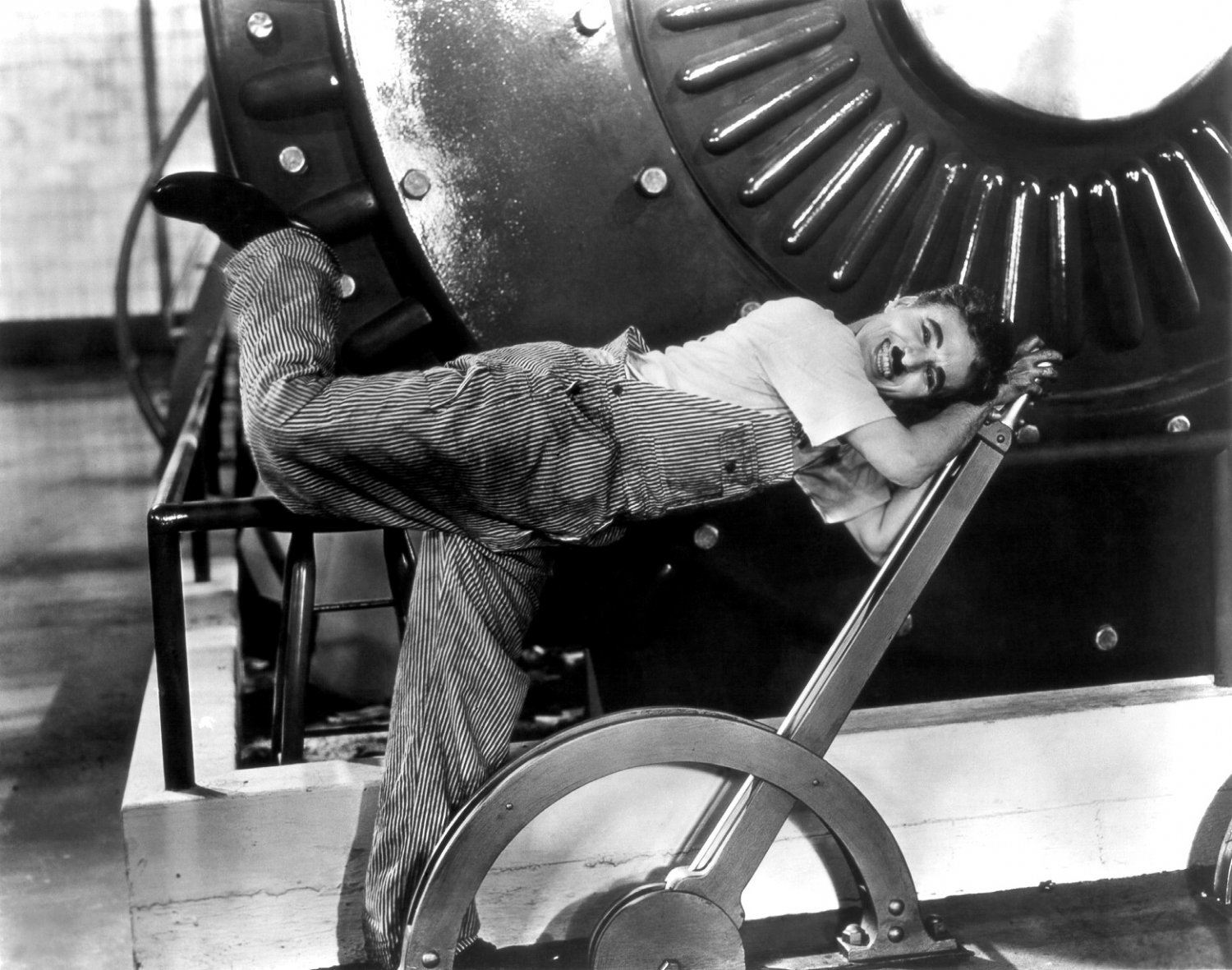
I woke up to the sound of a clock without a screw in the back, a clock that is controlled by a signal from an unknown source by somebody I don't know.
After it was registered by the Central Agency that I woke up, I made it through the morning rituals, paying for the water in the bathroom I use, which was originally free and warmed up by electricity supplied by a great company I don't know and which will most likely be more expensive next month. Struggling in the kitchen with partially functional and partially dysfunctional gizmos, preparing my breakfast consisting of ecologically modified ingredients enriched with unspecified insects, I smeared the butter, which is not butter anymore, on bread that had the consistency of an old shoe lying at the bottom of a filthy river for a long time. I managed to start my car, which used to be operated by one simple key, easy to duplicate… but alas, it is now operated by a chip where the key may not function when the chip fails to function, thus rendering my car useless. The price of two new chip-operated extra keys comes close to the price of a second-hand car I could buy with three old keys already included.
Previously, cars used to drive on a single source of fuel: petrol.
But now, being more advanced, we need two sources of energy: petrol and electricity.
In hybrid fashion, our problem multiplied.
"It's more ecological," they said, but nobody explained where to dispose of the self-igniting batteries powering such cars, batteries of proportions never seen before. Neither do we understand where the ingredients for such batteries are derived from, surely through mining carried out in the most unecological manner in distant countries by humans who work like slaves.
In times of shortage of either petrol or electricity, we may use our cars as sofas, parked in front of our mortgaged houses or in our remote-control-operated garage doors, hoping that the electricity may not be switched off, as then we could neither get the car out of nor into the garage. While standing outside, we may simply be looking at our overgrown lawns as the grass-cutting machine, this time equipped with sensors and without any external operator, drives over to the neighbor to cut his grass instead. When our battery-driven cars are disposed of in huge amounts, we will leave behind a polluted landscape where our children can grow vegetables on decomposing battery-polluted fields.
As I took a deep breath of city-polluted air, I joined thousands of others heading for their meaningless jobs. Soon I realized that my smartphone, always reporting my location and conversations to some unknown agency hovering in the sky, would not be so smart today, as the battery was running out fast. I added to the already existing battery another gizmo in the form of a power bank power supply, but even that extra power soon needed another extra power source added to it.
Still, I maintained some hope that in case some of the gizmos I intended to use today were not functioning, I could call for help. As a matter of fact, I soon had to do so, as the still-functioning infotainment system informed me that after a few kilometers my car would stop functioning unless another additive was added to my diesel fuel. Previously, cars used to have one opening to fill with petrol. Now they have two openings: one for petrol and one for the additive. Hard to guess which one is more expensive.
To find out which was which, I called the service number mentioned in the manual but ended up only on some virtual switchboard where, by pressing number one on the phone, I then had to press number two, and after pressing number two, I was told by some automatic voice to press number three and wait for an answer to the sound of music I truly hated. Finally, after a long time without getting any answer, I ended up standing in a queue at the gas station in the company of other additive-seeking desperados. I wondered how I would survive another day in the job I hated so much, surrounded by colleagues who hated their jobs even more.
Trying to add some pleasure to my life, I looked around, but from the headlines of the newspapers sold around me and the disaster constantly reported by the internet, I was informed: things would get worse.
Some war in a distant place would soon reach us. Many had already died in some unknown country, and some beautiful woman had lost her beauty due to loosening implants in her breast area. An invisible virus would cause a plague we might all die from, and next week the weather would get worse. Another man had tried to rob a bank, the same bank profiting so much from the loan we took, not to be paid off in this lifetime… But there was hope: the female basketball team won over a male basketball team in Uganda. Surely, women are becoming more intelligent in a world filled with stupid men, and so better times are on the way.
Finally, arriving at my job, I was stunned by the news that it was closed because it was a holiday. No wonder so many people were driving on the congested roads — they were heading for places of pleasure. All at the same time and all to the same destination.
They were all heading for the same destination, where prices for tourists are especially high, parking places are overfilled and watched by eagerly parking-ticket-distributing police officers, and where snow is produced by machines because there had been no snowfall for weeks, only cold rain turning the landscape into gray muddy fields. Whenever everybody tries to enjoy the same thing at the same time in the same location, things become rather complicated, I noticed.
And so I drove home, switched all the gizmos off, and then I chanted Hare Krsna, hoping never to come back to this world again. After all, simplifying ones life helps one to advance spiritualy.
It's simple for the simple ones and complicated for the complicated ones.